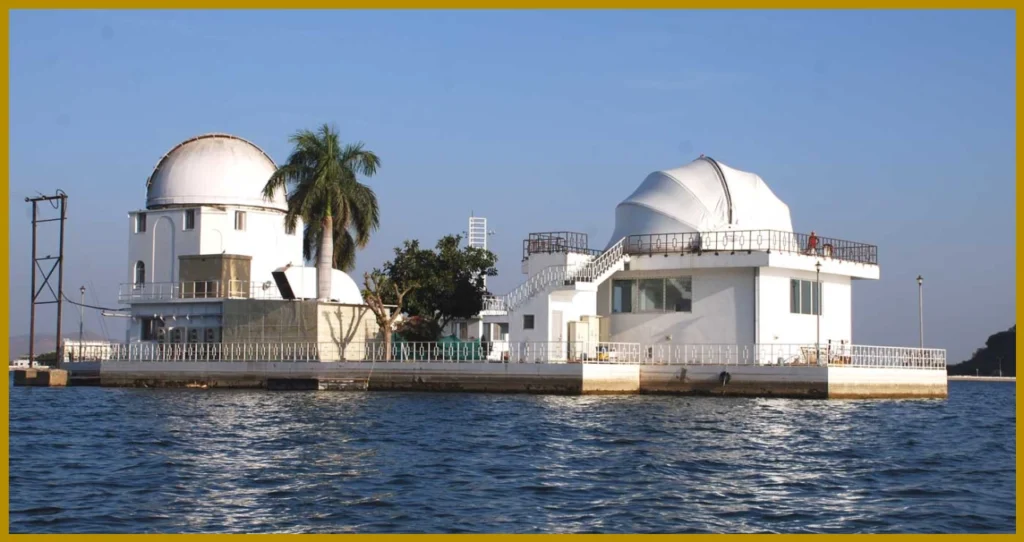
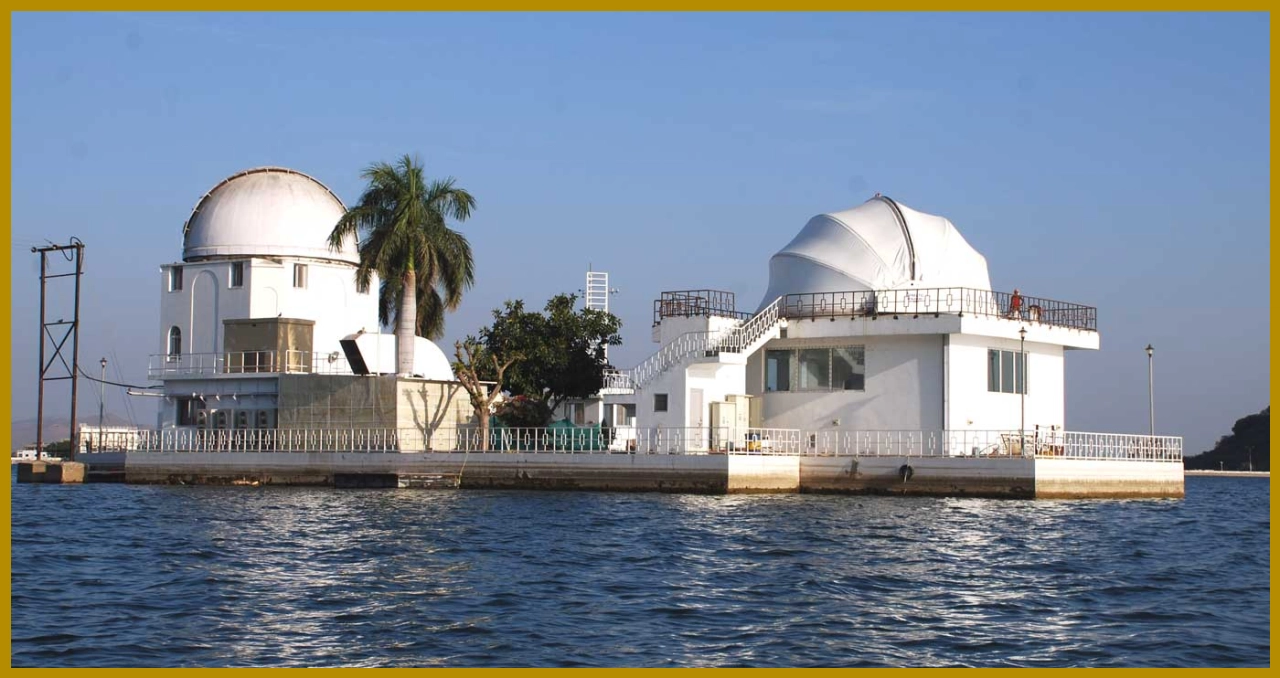
Udaipur, February 9: The Udaipur Solar Observatory, established in 1975 by the visionary late Professor Arvind Bhattnagar on an island in the world-famous Fatehsagar Lake, is celebrating its golden jubilee this year. In this context, an international conference titled “Exploring the Sun at High-Resolution: Present Perspectives and Future Horizons” will be held from February 10 to 13 at the Third Space, Udaipur.
Director of the observatory, Mr. Shibu Mathew, stated that the conference will provide a platform for experts to share findings from solar atmospheric events obtained through advanced telescopes and missions, and to discuss future directions in high-resolution solar physics. Approximately 100 distinguished solar physicists from India and abroad are expected to attend the workshop. The inaugural session on February 10 will feature a keynote address by Padma Shri A.S. Kiran Kumar from ISRO and the Space Commission. Dr. Lakshyaraj Singh Mewar will be the honored guest, while Professor Anil Bhardwaj will deliver the welcome speech. Professor Bhuvan Joshi will present a historical overview of the observatory.
Mr. Mathew highlighted that the Udaipur Solar Observatory has gained global recognition in the field of solar physics. This year marks a significant milestone as it also celebrates the 10th anniversary of the Multi-Application Solar Telescope (MAST), which is India’s largest and most advanced solar observation facility. The primary aim of the observatory is to advance the understanding of solar dynamics, including the interactions occurring between the sun’s atmospheric layers. Its broader goal is to clarify the effects of near-Earth space weather and assess how the solar magnetic field impacts terrestrial and space-based technologies. Mr. Mathew noted that the MAST telescope is at the center of the observatory’s research, enabling high-resolution solar physics investigations and complementing data from India’s Aditya L1 mission. Observations from MAST are integrated with other instruments like GONG and E-Callisto, aiding in the comprehensive study of solar events. These observational datasets also provide a foundation for advanced numerical simulations through the supercomputing resources of the Physical Research Laboratory.